
Closed Cell Insulation
Engineering Ultimate Thermal & Structural Performance
In critical commercial environments, hospitals, and premium custom homes, insulation must do more than just regulate temperature—it must protect the structural integrity of the building itself. Closed cell insulation is the most advanced, high-performance building envelope solution available today. At United Spray Foam NJ, we engineer uncompromising thermal, air, and moisture barriers that meet the absolute highest standards of building science and regulatory compliance.
Foam Insulation Comparison
| Feature | Open-Cell Foam | Closed-Cell Foam |
|---|---|---|
| R-Value per Inch | R-3.5 to R-4 | R-6 to R-7 |
| Density | Low (0.5 lbs/cubic ft) | High (2.0 lbs/cubic ft) |
| Air Barrier | Yes - Continuous Air Seal | Yes - Absolute Air Seal |
| Moisture Barrier | Vapor Permeable | 100% Impermeable Barrier |
| Structural Impact | Fills complex gaps | Adds immense rigidity |
| Acoustic Performance | Exceptional Sound Attenuation | Standard Sound Dampening |
| Expansion Rate | High (~100x liquid state) | Low (~30x liquid state) |
| Primary Applications | Interior partitions, acoustic ceilings, attics | Exterior envelopes, below-grade, high-moisture |
| Performance Advantages | Superior soundproofing, high-yield expansion | Maximum thermal resistance, extreme durability |
R-Value: Generally around 3.5 to 4.3 per inch, suitable for building envelopes, with 2x 6 walls achieving roughly R19-R21.
Cost: Often more cost-effective for residential projects compared to closed-cell.
Moisture: Being porous, it can absorb water, making it unsuitable for below-grade or high-moisture areas.
Application: It is typically applied by professionals to the interior, conditioned side of a space, taking about 2-3 days for installation, which includes trimming the excess.
Performance: Excellent for air sealing and noise reduction, but requires a, vapro barrier in certain climates
What is Closed Cell Insulation?
Unlike its open-cell counterpart, closed cell spray foam is a high-density (2.0 lbs/cubic foot), rigid polyurethane matrix. During application, the foam’s cells are completely sealed and packed tightly together. This creates an incredibly dense material that resists water, blocks vapor transmission, and drastically increases the physical strength of the structures it is applied to.
Key Performance Advantages
Maximum R-Value per Inch
Space is often at a premium in complex commercial architecture. Closed cell insulation delivers the highest thermal resistance of any commercial insulation on the market, yielding an impressive R-6 to R-7 per inch. This allows architects and builders to achieve exceptional energy efficiency and strict code compliance without sacrificing valuable interior square footage.
Absolute Air and Moisture Barrier
Moisture is the enemy of any structural foundation or commercial facility. Because of its impermeable cellular structure, closed cell foam acts as a 100% continuous air, water, and vapor barrier. It prevents condensation within wall cavities, completely mitigating the risk of hidden mold growth—a non-negotiable requirement for sterile healthcare facilities and premium real estate.
Unmatched Structural Reinforcement
Due to its high density and rigid curing process, applying closed cell insulation physically glues the building together. It has been proven to increase the “racking strength” of walls and roof decks by up to 250%. This severe-weather resistance makes it an essential structural upgrade for high-stakes projects.
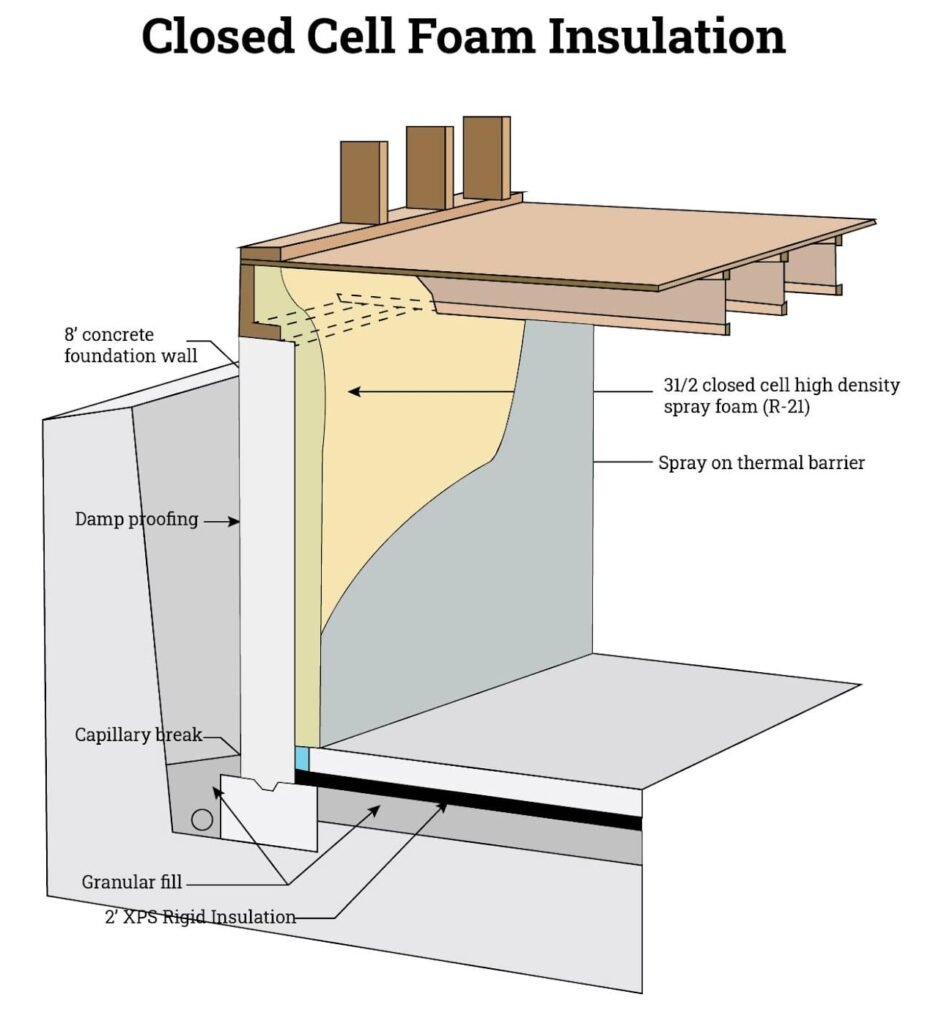
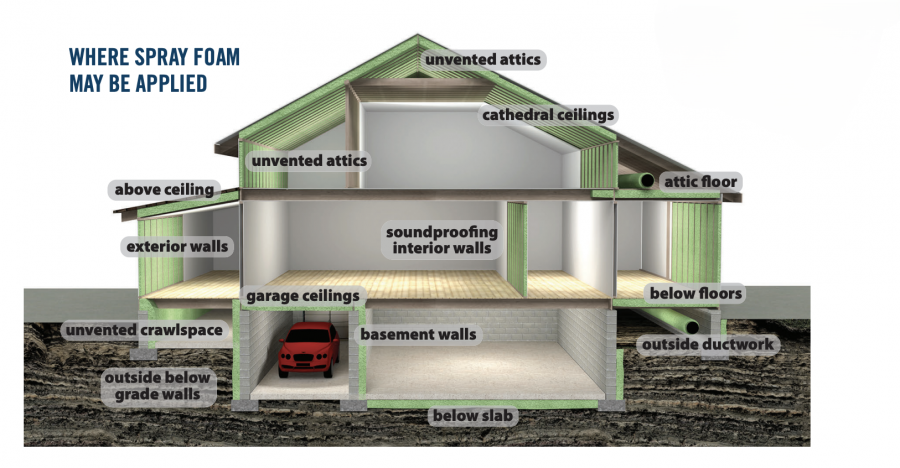
Insulating Your Basement
Moister Control, Energy Efficiency, Air Quality, Air Sealing, Durability, Odor elimination, Structural Strength
Open Cell Spray Foam Insulation
Walls: 2"-3.5" (R-13 to R-21 code) for excellent air sealing and vapor control.
Closed Cell Insulation
High-density (2 lbs/cubic ft), impermeable insulation delivering an exceptional R-6 to R-7 per inch. Adds immense structural rigidity and serves as a total air and moisture barrier.
Open Cell Spray Foam Insulation
Low-density foam offering excellent sound absorption and an R-value of 3.5 to 4 per inch. High-expansion application ideal for interior walls, acoustic control, and complex cavities.
Our Services
Engineering Superior Thermal Barriers.
We provide specialized spray foam insulation systems tailored to the exact specifications of your facility. From advanced moisture barriers to superior sound attenuation, our applications meet the rigorous demands of commercial codes and high-end residential builds.
Premium Spray Foam Experts
Years of Combined Experience
Discover our full range of high-performance insulation solutions. View All Services
Premium Applications for Closed Cell Foam
Because of its rigidity and impermeability, our technicians deploy closed cell insulation for the most demanding applications in New Jersey:
Below-Grade & Basements: The only insulation capable of resisting hydrostatic pressure and preventing subterranean moisture from entering the building envelope.
Exterior Commercial Walls & Metal Buildings: Providing a flawless vapor retarder and thermal break for corporate and industrial facilities.
Cold Storage & Wine Cellars: Creating perfectly sealed, climate-controlled environments that require precise temperature and humidity management.
Coastal & High-Wind Residential Builds: Enhancing the structural integrity and flood resistance of luxury properties.
The Value of Uncompromising Quality
We do not compete on budget; we compete on absolute performance and long-term ROI. Upgrading to closed cell insulation is a premium investment that pays dividends through drastically reduced commercial HVAC loads, extended lifespan of mechanical systems, and the elimination of moisture-related structural degradation. We utilize state-of-the-art proportioning equipment to ensure a flawless chemical reaction and application on every single job.
Closed Cell Vs. Open Cell Spray Foam
While closed cell insulation provides the ultimate structural reinforcement and absolute moisture barrier for exteriors, basements, and commercial envelopes, interior applications that strictly require maximum sound attenuation may benefit from our open cell spray foam solutions.
Fortify Your Facility’s Thermal Envelope
Your project’s structural and thermal performance is too critical to leave to chance. Whether you are constructing a strict-compliance medical facility, an industrial complex, or a high-wind coastal property, partner with New Jersey’s premier closed cell insulation engineers.
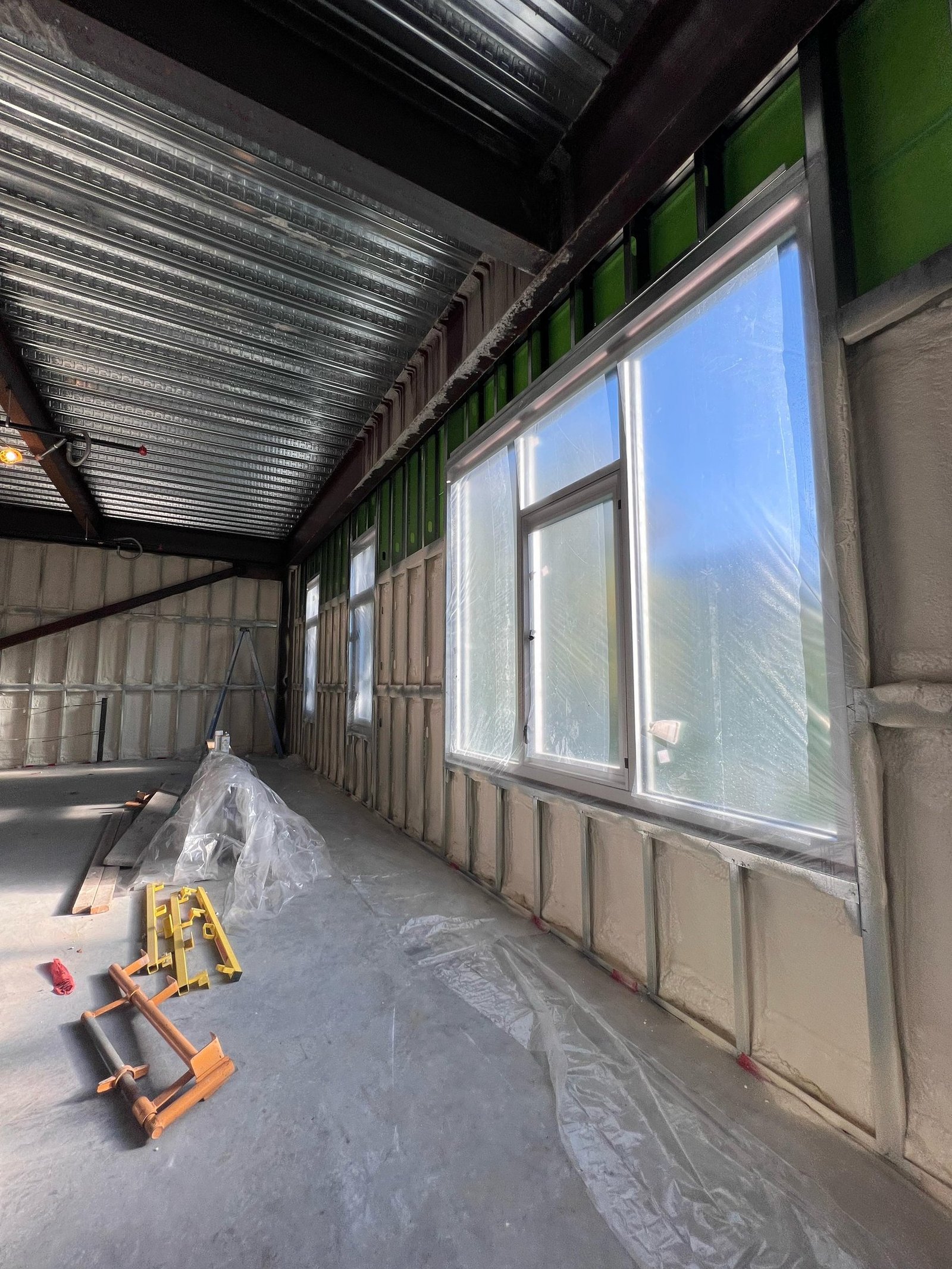
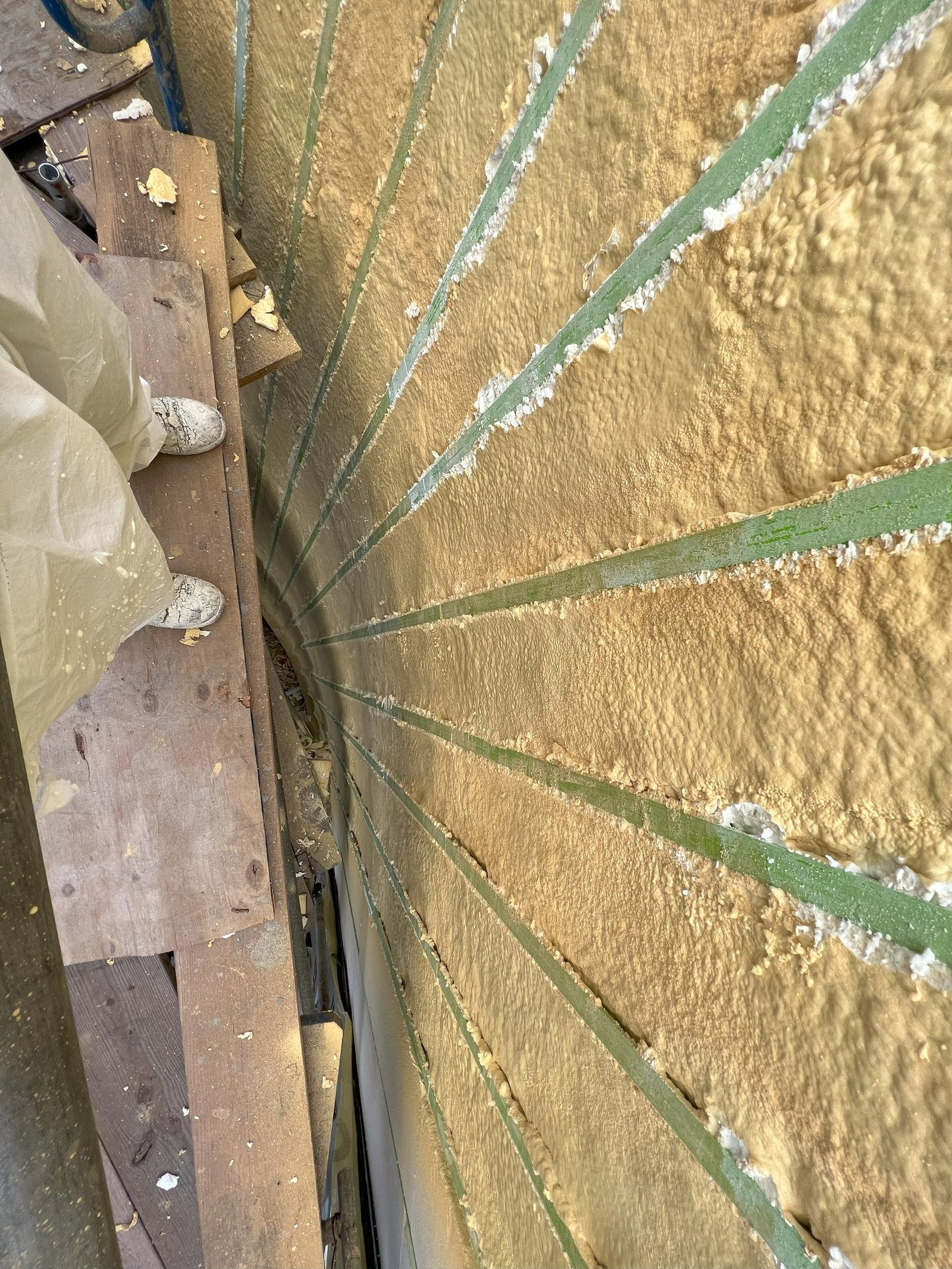
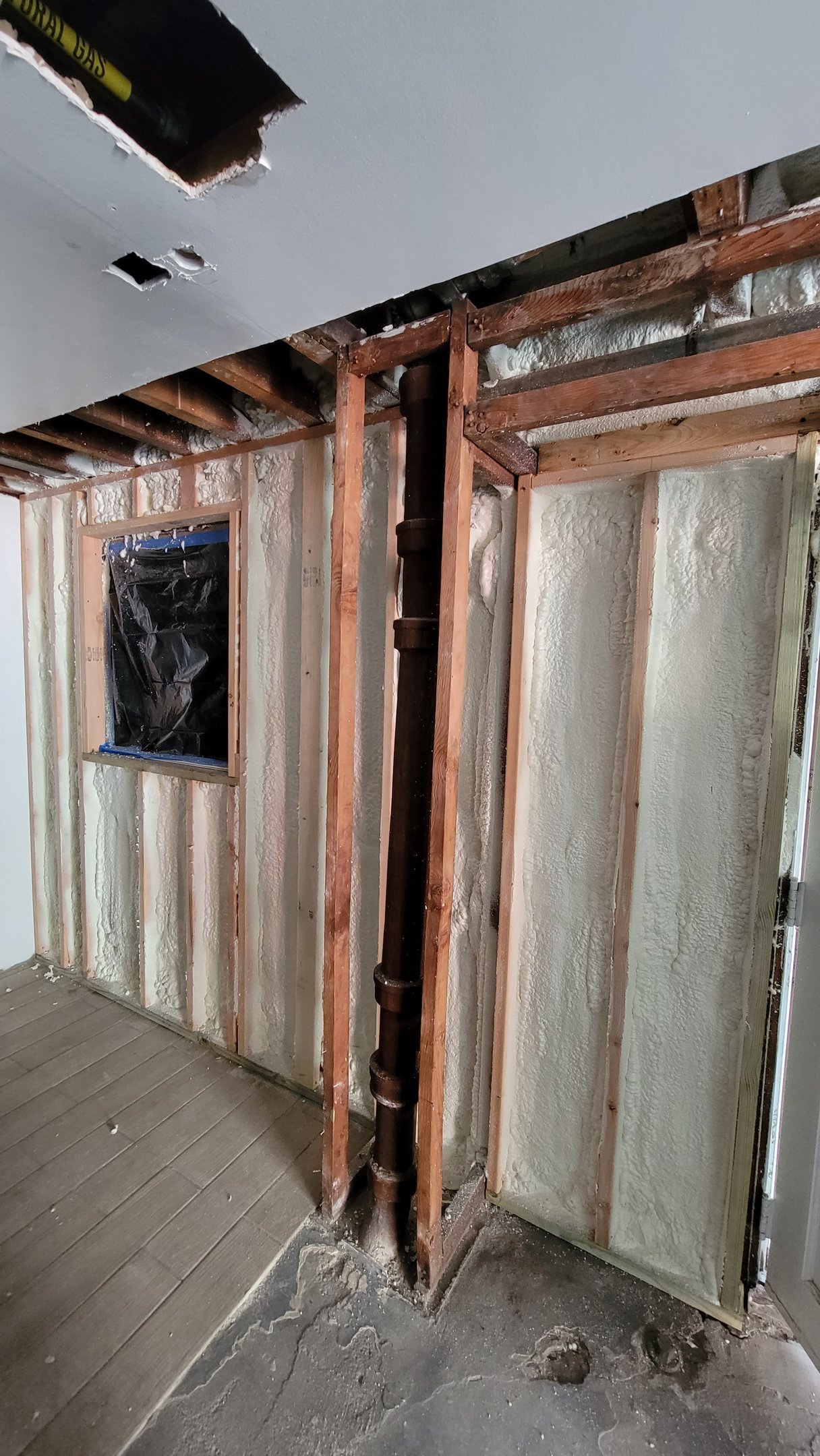
Featured Projects
Engineering Absolute Efficiency.
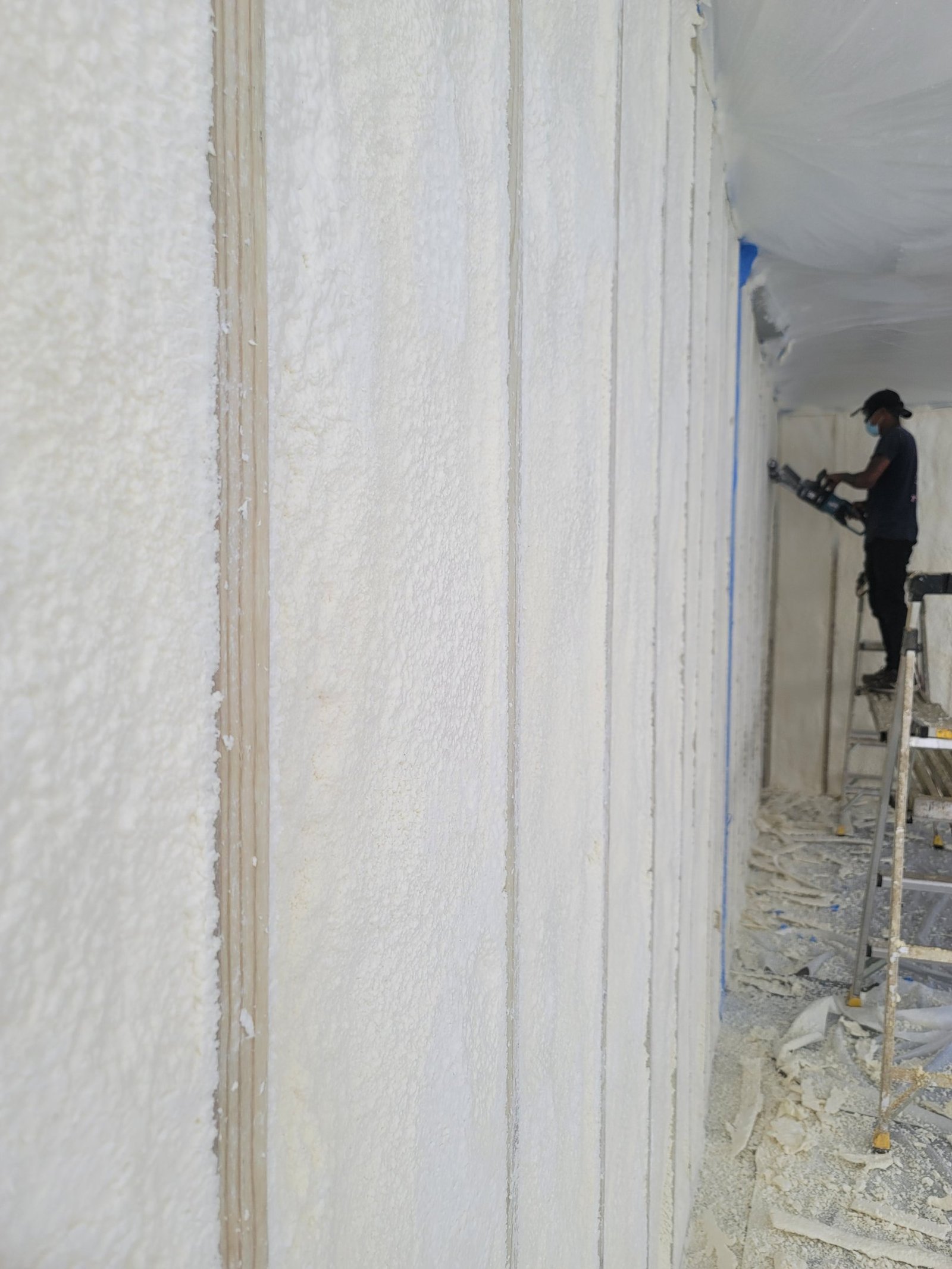
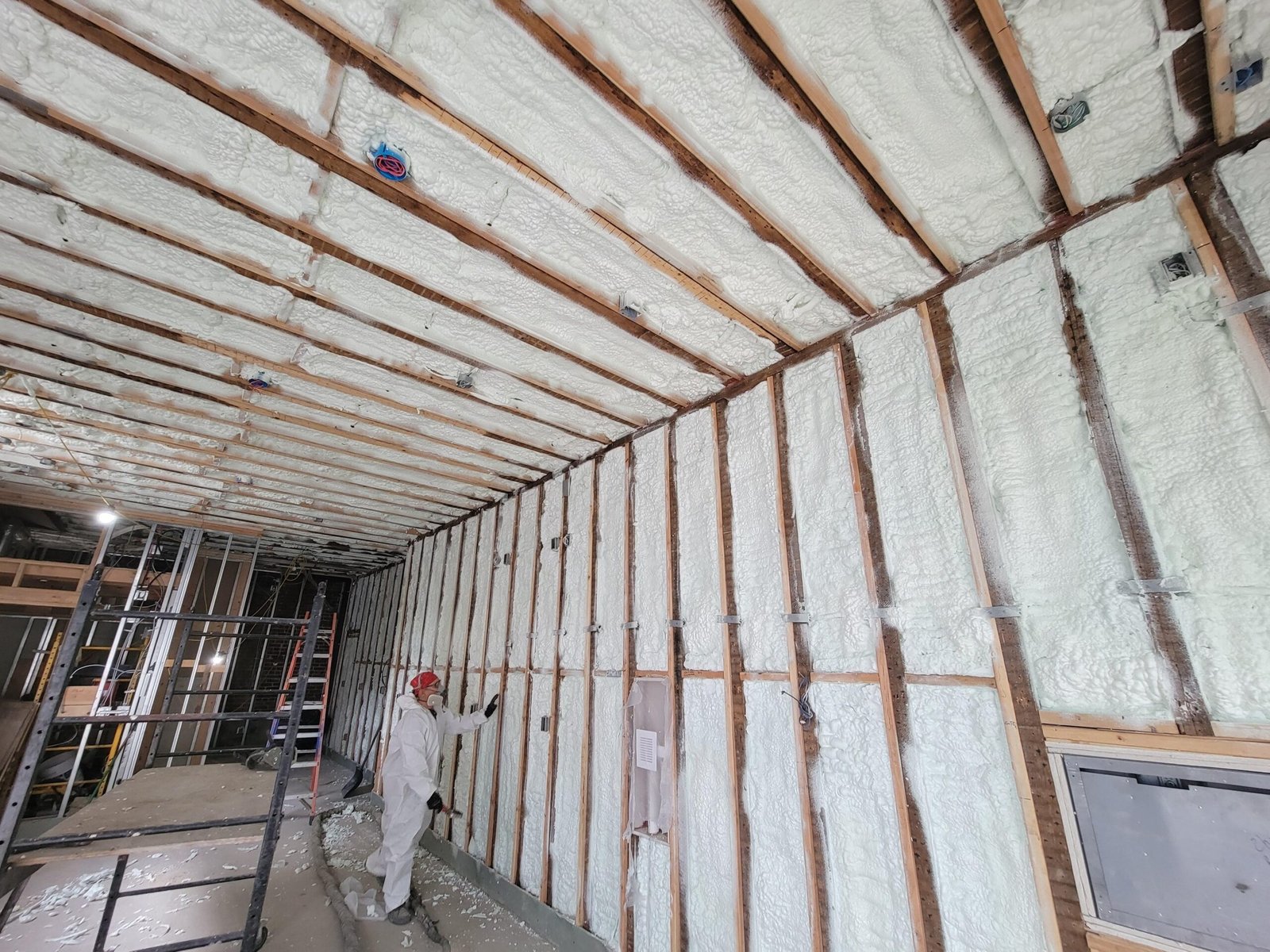
We don’t just complete jobs; we solve complex thermal challenges. From high-compliance medical facilities to architecturally complex custom builds, our portfolio showcases a consistent standard of excellence and unmatched technical precision across New Jersey.
FAQ
Frequently Asked Questions Foam
Closed Cell Insulation
What is the primary difference between open cell and closed cell insulation?
The main differences are density, moisture permeability, and R-value. Closed cell is a rigid, high-density foam that blocks water and vapor while offering an R-value of up to R-7 per inch. Open cell is a lower-density, flexible foam that is breathable, offers exceptional soundproofing, and has an R-value of about R-3.8 per inch.
Does closed cell insulation require a separate vapor barrier?
No. At a thickness of 1.5 inches or greater, high-density closed cell insulation qualifies as a Class II vapor retarder. It completely eliminates the need for installing separate plastic vapor barriers, streamlining the construction process and ensuring a more reliable seal.
Is closed cell spray foam water-resistant?
Yes, it is highly water-resistant. In fact, closed cell insulation is classified by FEMA as an acceptable flood-resistant building material. If exposed to bulk water, it will not absorb the moisture, retain it, or lose its structural integrity, making it the premier choice for basements, crawl spaces, and coastal properties.
Can closed cell foam be applied to metal commercial buildings?
Absolutely. It is the industry standard for commercial metal buildings. Condensation is a major issue in metal structures due to temperature fluctuations. Closed cell insulation bonds directly to the metal substrate, creating a monolithic thermal break that entirely prevents condensation and subsequent rust.
How does this impact the structural strength of my facility?
When sprayed into wood or steel framing, the foam expands and cures into a rigid plastic state. This essentially “glues” the framing members together, significantly increasing the shear strength and wind uplift resistance of the building.