If you own a home in Northern New Jersey, you are intimately familiar with our region’s aggressive weather swings. From the blistering, humid July afternoons in Paterson to the freezing, snow-heavy January nights in Livingston, your home’s HVAC system is forced to work overtime. However, the biggest culprit behind your sky-high utility bills and uncomfortable drafty rooms isn’t your furnace or your air conditioner. The real problem is likely sitting right above your head: your attic.
For decades, the standard building practice was to lay down a few rolls of fiberglass on the attic floor and call it a day. Today, building science has proven that this outdated method costs homeowners thousands of dollars in wasted energy. At United Spray Foam NJ, we specialize in attic retrofitting—a process that modernizes your home’s thermal envelope using high-performance spray foam insulation.
In this comprehensive guide, we will explore exactly why your current attic insulation is failing, the science behind building a “hot roof,” and why upgrading to open cell spray foam insulation is the single best investment you can make for your New Jersey property.
1. The Hidden Cost of an Under-Insulated Attic
To understand why an attic retrofit is necessary, we must first look at how air moves through a house. Buildings experience a phenomenon known as the “stack effect.” Because warm air naturally rises, the heated air inside your living space constantly pushes upward toward your ceilings and into your attic.
If your attic is insulated with traditional fiberglass batts or blown-in cellulose, you have a major problem. These materials filter air; they do not stop it. The expensive, conditioned air you just paid to heat escapes right through the fiberglass and out of your roof vents.
Simultaneously, this escaping air creates negative pressure in the lower levels of your home. To replace the air that just leaked out of your attic, your house sucks in cold, unconditioned outside air through the crawlspace, basement, and gaps around your windows. This continuous loop of escaping heat and infiltrating cold air means your HVAC system never gets to rest. Whether you live in a historic colonial in Montclair or a mid-century split-level in Wayne, the stack effect is actively draining your wallet.
2. Why Traditional Insulation Fails in New Jersey Climates
Traditional insulation materials like fiberglass and cellulose were the standard for a long time simply because they were cheap. But when evaluated for long-term performance, their flaws become obvious.
- Air Permeability: As mentioned, fiberglass does not stop airflow. It is essentially an air filter. As dirty attic air passes through it over the years, the fiberglass turns gray or black, weighed down by dust and moisture.
- Compression and Settling: Over time, blown-in cellulose settles and compresses. An attic that originally had 12 inches of cellulose might compress down to 6 inches after a decade, drastically reducing its thermal resistance (R-value).
- Moisture Retention: New Jersey is incredibly humid. When humid summer air enters a traditional vented attic, the moisture can condense on the fiberglass. Wet fiberglass loses its insulating properties entirely and can lead to mold growth on your wooden ceiling joists.
- Pest Infestations: Mice, squirrels, and insects love traditional insulation. It provides the perfect, warm nesting material for pests looking to escape the cold East Orange winters.
The solution to all of these problems is an airtight, monolithic barrier. That is exactly what spray foam insulation provides.
3. The Science of Attic Retrofitting: Creating a “Hot Roof”
When we talk about an attic retrofit using spray foam insulation, we are usually talking about changing the fundamental building science of your home by creating an “unvented attic assembly,” often referred to as a “hot roof.”
Vented vs. Unvented Attics
In a traditional vented attic, the insulation sits flat on the floor of the attic (right above your upstairs ceiling). Vents in your soffits and at the peak of your roof allow outside air to blow freely through the attic space. This means the temperature inside your attic is essentially the same as the temperature outside. If it is 20 degrees outside in Englewood, it is 20 degrees in your attic.
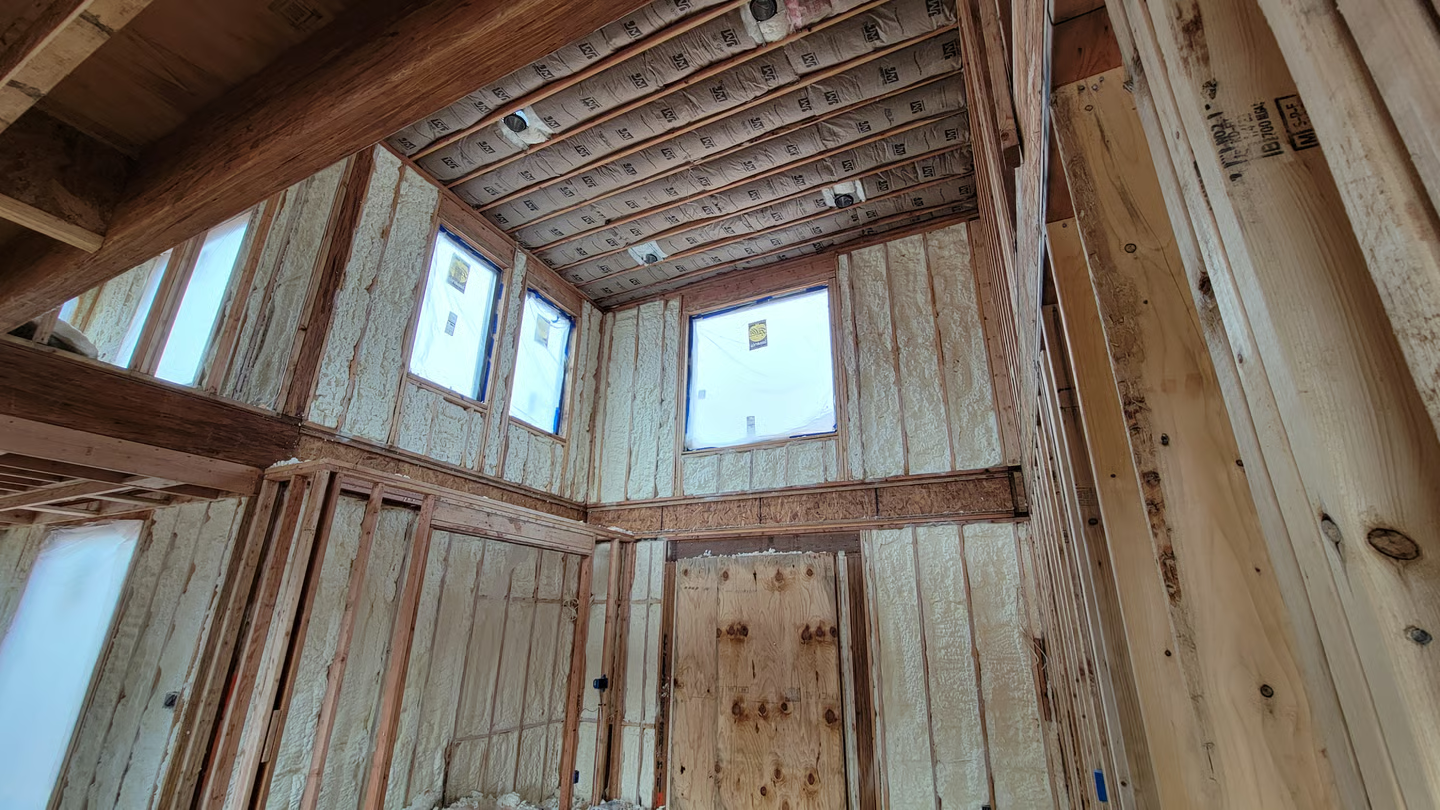
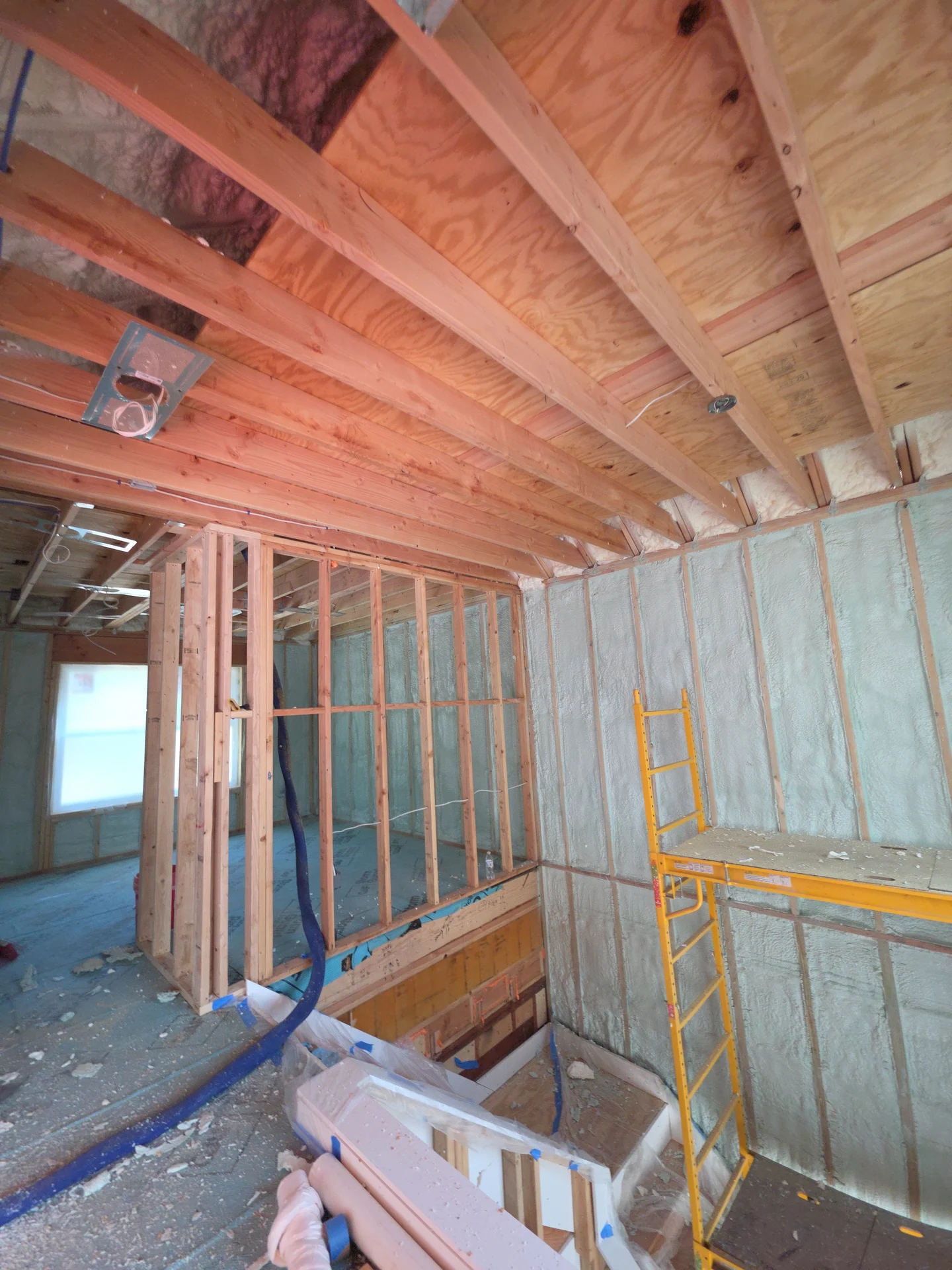
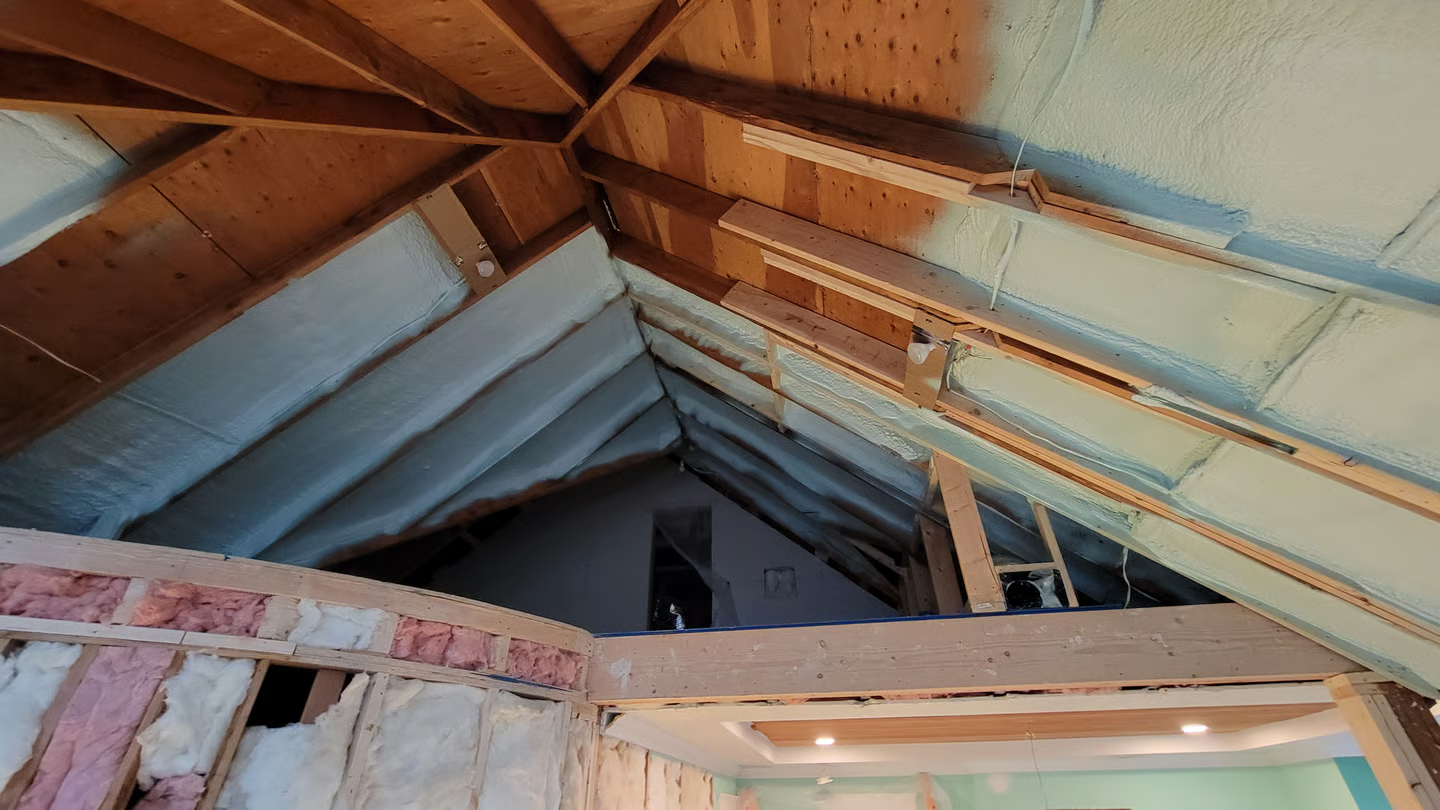
An unvented attic flips this concept upside down. Instead of insulating the attic floor, we apply open cell spray foam directly to the underside of the roof deck (between the rafters) and seal off all the vents.
Shifting the Thermal Boundary
By spraying the roof deck, we move the home’s “thermal boundary” all the way up to the roofline. Your attic is now brought inside the conditioned envelope of the house. The results are transformative. Even on a freezing winter day, the attic temperature will remain within 5 to 10 degrees of your downstairs living space.
If you have HVAC ductwork running through your attic—which is incredibly common in Clifton and Newark homes—those thin metal ducts are no longer sitting in a freezing or boiling environment. They are sitting in a temperate, conditioned space, meaning the air traveling through them doesn’t lose its heat or cooling power before it reaches your bedroom vents.
4. Choosing the Right Material: The Power of Open Cell Spray Foam
For attic retrofits, the undisputed champion of insulation materials is open cell spray foam insulation. While we utilize closed-cell foam for commercial foundations, exterior walls, and specialized industrial applications, open cell is uniquely engineered for interior residential roof decks.
Here is why open cell spray foam is the optimal choice for your attic:
Massive Expansion Rate
When applied as a liquid, open cell foam expands up to 100 times its original volume in mere seconds. Roof assemblies are full of complex geometries—trusses, intricate valleys, recessed lighting cans, and awkward corners. Traditional materials cannot fit into these spaces without leaving gaps. The extreme expansion of open cell foam ensures that every single microscopic crack, crevice, and void is perfectly sealed.
Vapor Permeability (Breathability)
This is a critical factor for roof decks. Open cell spray foam insulation is airtight but vapor permeable. If a rogue shingle blows off your roof during a harsh Paterson storm and a roof leak occurs, the water will pass freely through the open cell foam, alerting you to the leak so you can fix the roof. If a dense closed-cell foam were used instead, the water could become trapped between the foam and the roof deck, silently rotting the wood out of sight for years. Open cell foam protects the structural integrity of your roof by allowing it to “breathe.”
Sound Dampening
As a low-density, sponge-like material, open cell foam has incredible acoustic properties. It dramatically dampens the sound of heavy rain, hail, and exterior neighborhood noise, creating a quieter, more peaceful home environment.
5. Defeating the New Jersey Winter: The End of Ice Dams
One of the most destructive winter phenomena for homeowners in towns like Wayne and Livingston is the formation of ice dams.
An ice dam occurs when heat escapes from your living space, rises into your poorly insulated attic, and warms the upper sections of your roof. This unnatural heat melts the snow sitting on your roof. The melted water runs down the slope of the roof until it reaches the eaves and gutters, which overhang the edge of the house and remain freezing cold.
When the water hits the cold eaves, it refreezes, forming a solid dam of ice. As more snow melts, the water pools up behind the ice dam and begins to back up underneath your roof shingles, eventually leaking directly into your ceilings and walls, causing catastrophic water damage.
By sealing the roof deck with spray foam insulation, you completely stop the heat from escaping your living space and warming the roof. The roof remains a consistent, cold temperature from peak to eave, meaning the snow melts naturally and evenly from the sun, preventing ice dams from ever forming.
6. Surviving the Summer Heat in Newark and Clifton
While we focus heavily on the cold, New Jersey summers can be brutal. Radiant heat from the sun beats down on your dark roof shingles all day long. In a traditional vented attic in Newark or East Orange, that radiant heat transfers directly into the attic space, causing temperatures to skyrocket to 140°F or even 150°F.
This massive blanket of heat sits right on top of your ceiling, radiating downward into your bedrooms. Your air conditioner has to fight against this 150-degree oven just to keep your upstairs cool.
When we apply open cell spray foam to the underside of the roof deck, we stop the radiant heat transfer in its tracks. The foam acts as a powerful thermal break. Even on a 95-degree August day in Clifton, an attic sealed with spray foam will rarely exceed 80 or 85 degrees. The reduction in your air conditioning load is immediate and significant.
7. The United Spray Foam NJ Retrofit Process
Attic retrofitting is a complex building science procedure that requires professional execution. At United Spray Foam NJ, our process is surgical, clean, and highly efficient. Here is what you can expect when our team arrives at your property:
Step 1: Complete Insulation Removal
We never spray foam over old, dirty insulation. Our crews begin by using high-powered commercial vacuums to completely remove all existing fiberglass, cellulose, rodent droppings, and debris from the attic floor. We strip the space down to the bare drywall and floor joists.
Step 2: Site Preparation and Masking
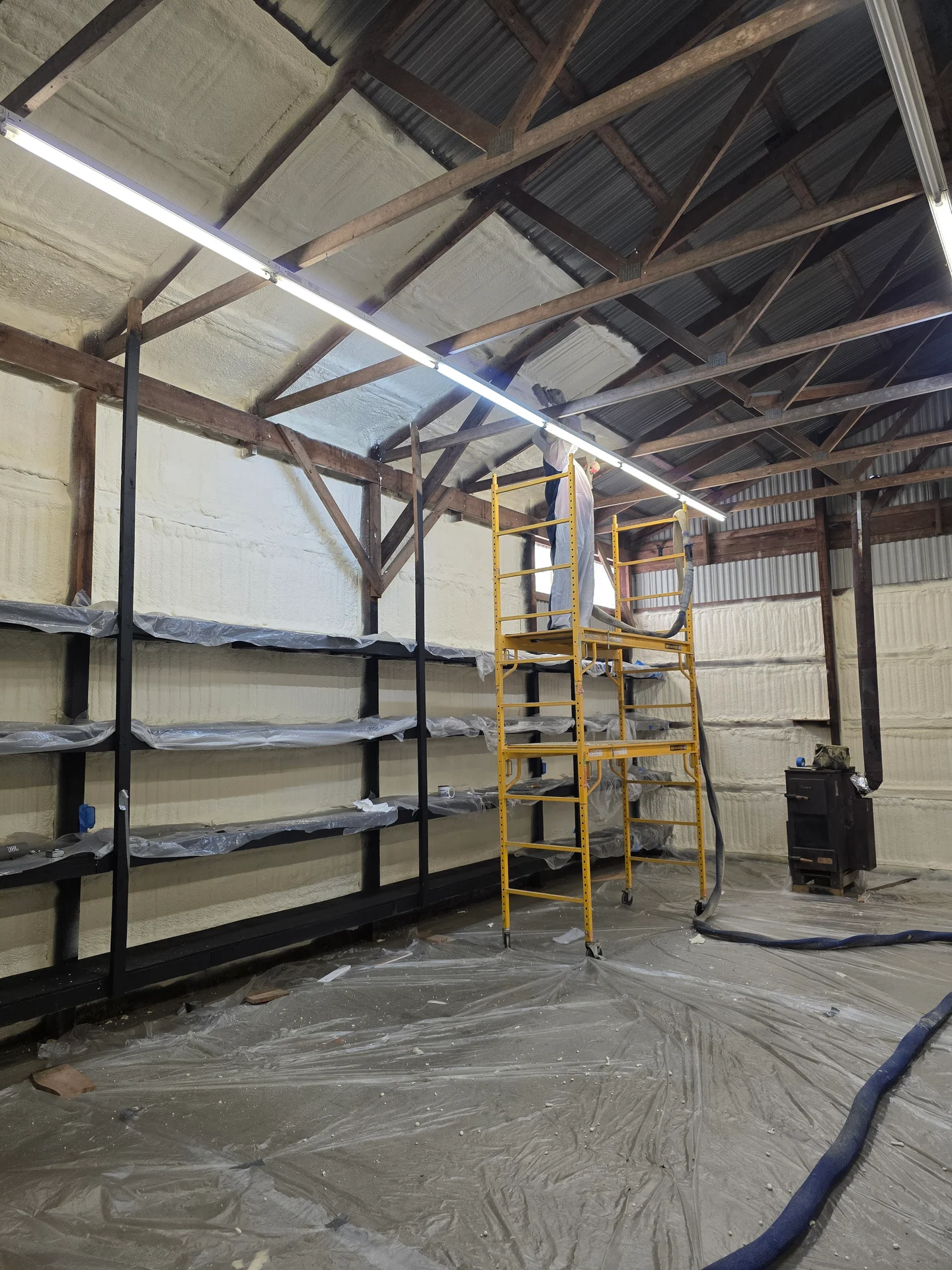
Spray foam is a permanent application. We take immense care to protect your home. We mask off all attic floors, exposed brick chimneys, HVAC equipment, and storage areas. We also lay down protective runners through your hallways and stairs to ensure your home remains pristine while we work.
Step 3: Climate-Controlled Application
Our state-of-the-art proportioning equipment monitors the exact temperature and pressure of the chemical components. Our highly trained technicians apply the open cell spray foam insulation directly between the roof rafters, ensuring a smooth, consistent depth that meets precise R-value specifications.
Step 4: Ventilation Sealing
We permanently seal off all soffit vents, gable vents, and ridge vents, completing the transition from a vented to an unvented, conditioned space.
Step 5: Final Cleanup and Inspection
Once the foam has cured (which takes only minutes), we remove all masking materials, clean the work area thoroughly, and conduct a final thermal inspection to guarantee there are absolutely zero air leaks or thermal bridges remaining.
8. Unmatched ROI: Why Spray Foam is an Investment, Not an Expense
Upgrading to spray foam insulation is not just a home improvement project; it is a financial investment that yields compounding returns.
- Immediate Utility Savings: Most homeowners experience a 20% to 40% reduction in their monthly heating and cooling costs immediately following an attic retrofit. Over the lifespan of the home, the insulation pays for itself multiple times over.
- HVAC Longevity: Because your furnace and air conditioner are no longer fighting the stack effect or extreme attic temperatures, they run less frequently. This drastically reduces wear and tear, extending the life of your expensive HVAC equipment.
- Increased Property Value: Energy-efficient homes are highly sought after in the New Jersey real estate market. A sealed, conditioned attic is a premium selling feature that adds immediate tangible value to your property.
Take Control of Your Home’s Climate Today
You do not have to live with drafty rooms, massive energy bills, and the constant fear of winter ice dams. It is time to upgrade your home’s thermal envelope to modern standards.
United Spray Foam NJ is the region’s premier insulation contractor. We deliver uncompromising quality, elite building science expertise, and flawless execution to homeowners across Northern New Jersey.
Secure Your Attic Retrofit Consultation Today:
- Phone: (862) 291-7686
- Office: (201) 819-4671
- Location: 199 Darlington Ave, Ramsey, NJ 07446
- Hours of Operation:
- Monday – Friday: 7:00AM – 6:00PM
- Saturday: 7:00AM – 4:00PM