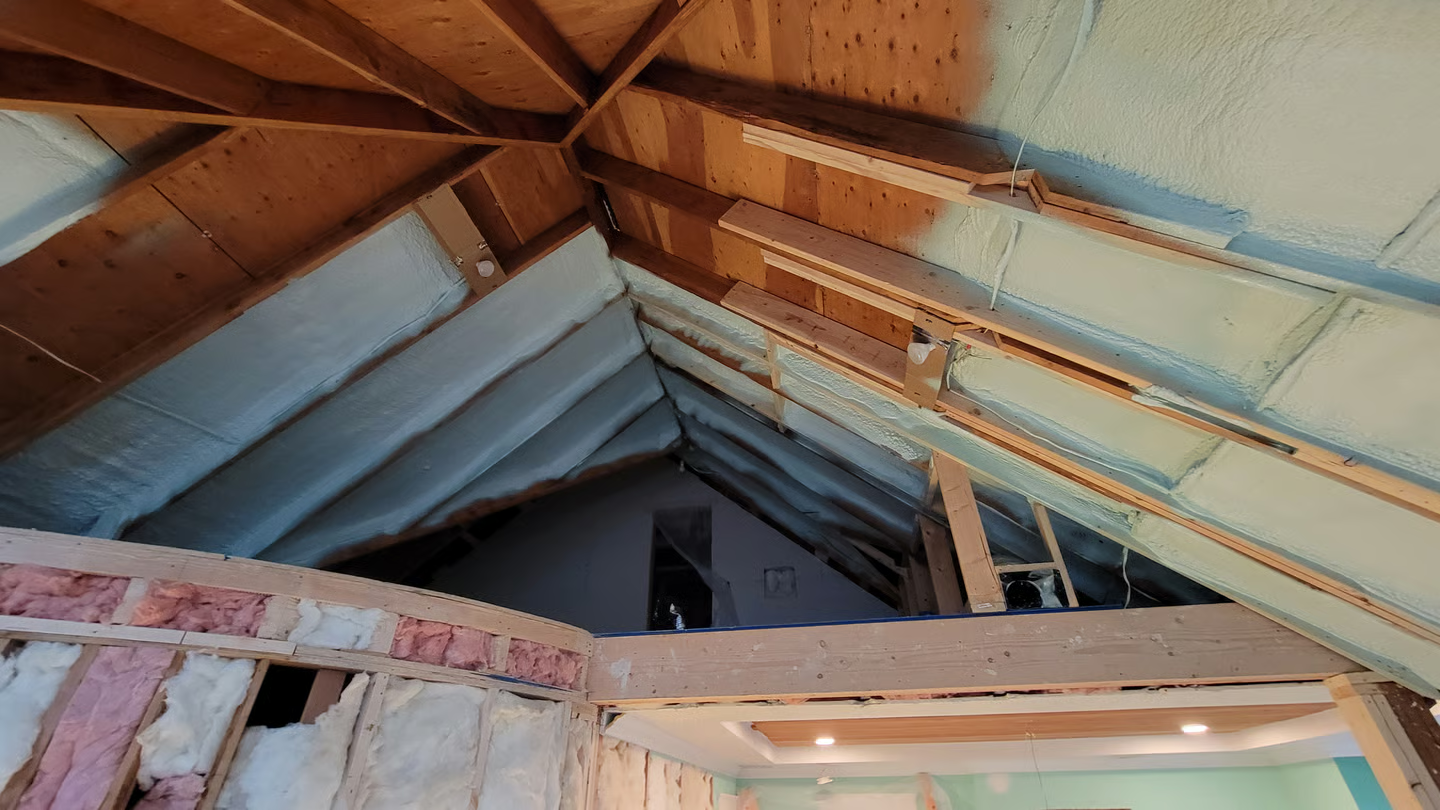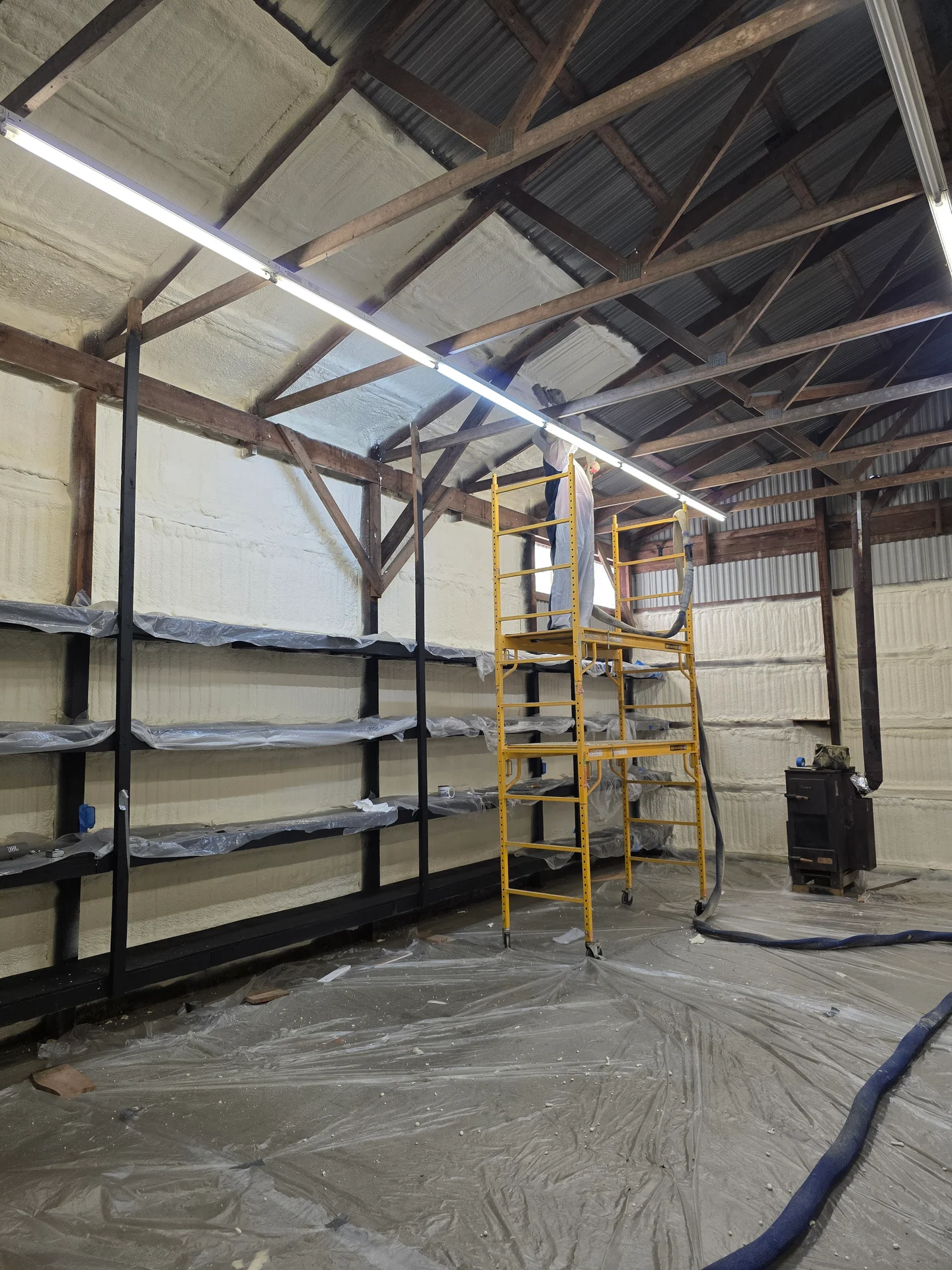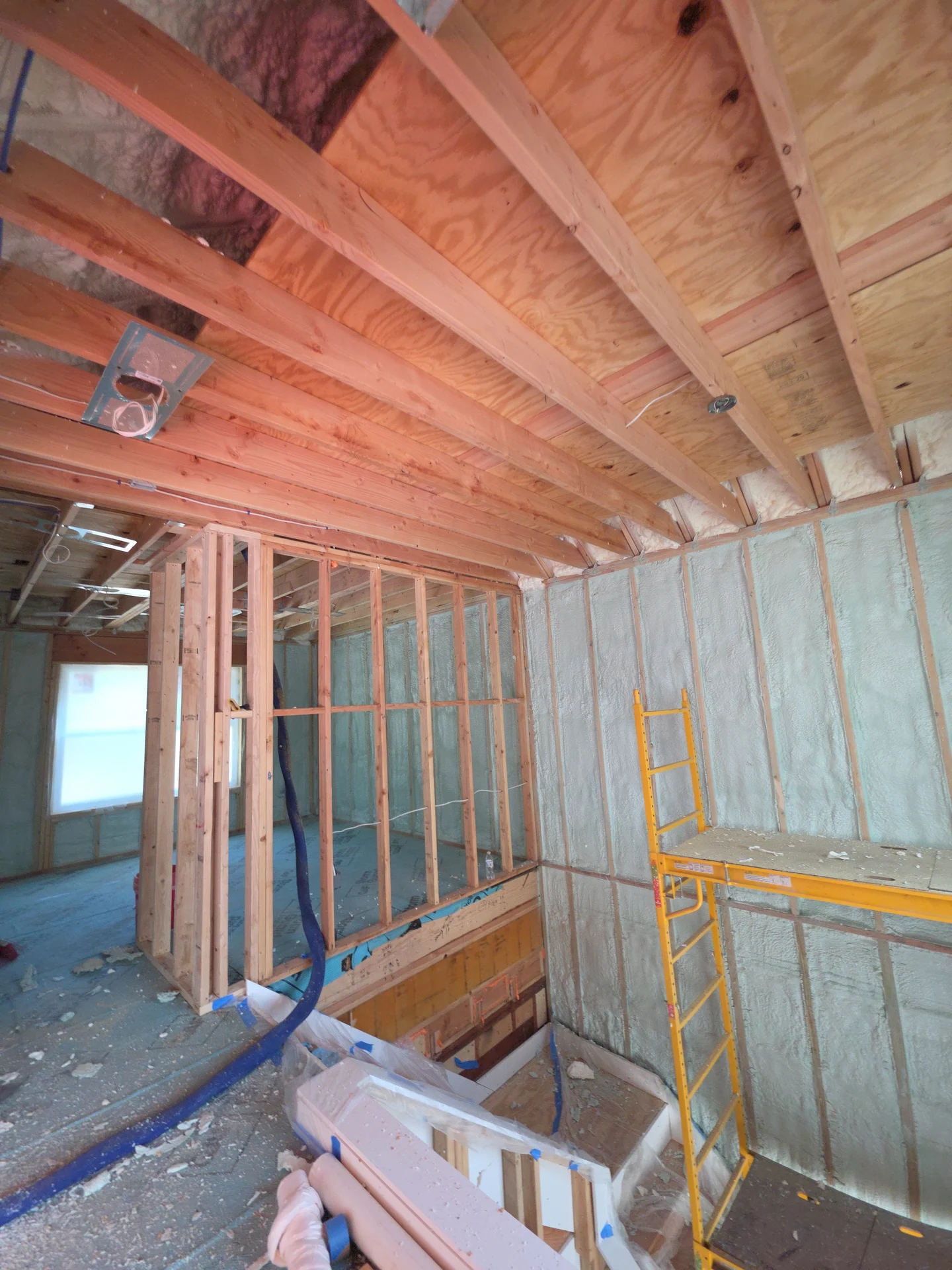
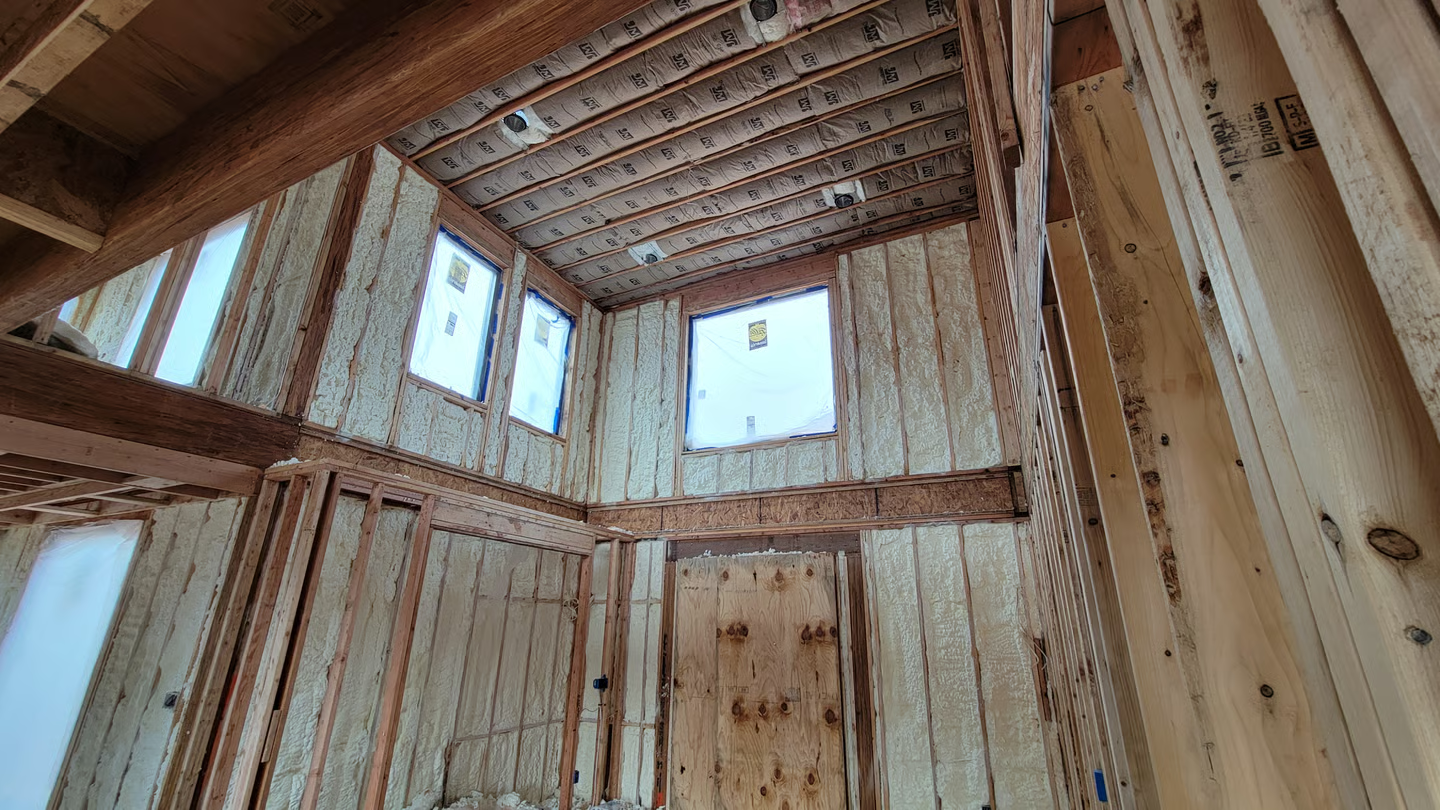
The construction industry in Northern New Jersey is evolving rapidly. As building codes become stricter and energy costs continue to climb, architects, builders, and homeowners from Newark to Paterson are turning away from outdated fiberglass and embracing advanced building science. At the forefront of this shift is spray foam insulation.
However, with any disruptive technology comes a wave of misinformation. If you are planning a custom home build in Montclair or retrofitting an older property in East Orange, you have likely encountered conflicting advice about which insulation material is best. Much of this confusion surrounds the use of half-pound, low-density foam.
At United Spray Foam NJ, we believe that an educated client makes the best decisions for their property. In this comprehensive guide, we are pulling back the curtain on the building science to debunk the most pervasive myths about open cell spray foam insulation.
Myth #1: “Open Cell Spray Foam Traps Moisture and Causes Wood Rot”
This is perhaps the most common—and most misunderstood—myth in the insulation industry. The fear is that if water gets into a wall cavity or roof deck, the foam will hold onto that moisture like a wet sponge, causing the wooden studs or roof decking to rot away.
The Truth: Vapor Permeability is a Feature, Not a Bug
The reality is exactly the opposite. The chemical structure of open cell spray foam means it is vapor permeable (often referred to as breathable). It allows moisture vapor to pass right through it.
Why is this important for New Jersey homes? Let’s look at a real-world scenario in Wayne or Livingston. If a massive winter storm damages a few shingles and causes a minor roof leak, water will enter the attic assembly.
- If you had applied a rigid, impermeable closed-cell foam to the underside of that roof deck, the water would be trapped between the foam and the wood. You would never see the leak from the inside, and the wood would silently rot away over several years.
- Because open cell spray foam insulation breathes, that water will migrate through the foam and drip into the attic space. This alerts you to the roof leak immediately so you can fix the shingles before any structural wood rot occurs.
Furthermore, because it creates a perfect air seal, it prevents warm, humid indoor air from meeting cold outdoor surfaces within the wall cavity, which completely eliminates the condensation that actually causes mold in the first place.
Myth #2: “Closed Cell is Always Better Because it has a Higher R-Value”
When builders in Clifton or Englewood look at spec sheets, they immediately notice that closed-cell foam has an impressive R-value of roughly R-6 to R-7 per inch, while open cell spray foam sits around R-3.5 to R-4 per inch. The immediate assumption is that higher R-value means it is a superior product for every application.
The Truth: Air Sealing Trumps R-Value in Many Applications
R-value is a measurement of thermal resistance (how well a material stops heat conduction). However, heat doesn’t just transfer through conduction; it transfers primarily through convection (air movement).
You can pack a wall full of R-30 fiberglass batts, but if air can easily blow through the seams and gaps, the effective “real world” R-value drops drastically. Spray foam insulation changes the game because it acts as both a thermal barrier and an absolute air barrier.
Once you stop the air leakage, the strict R-value becomes less of a defining factor. For interior walls, unvented attic roof decks, and complex cavities where immense expansion is needed to fill every void, open cell spray foam insulation provides phenomenal thermal performance. We use closed-cell foam where structural rigidity or absolute vapor barriers are required (like crawlspaces or exterior continuous insulation), but open cell is often the optimal choice for interior residential applications.
Myth #3: “Spray Foam is Toxic and Ruins Indoor Air Quality”
We hear this concern frequently from families renovating homes in Montclair or building new properties in Livingston. There is a lingering myth that spray foam constantly off-gasses dangerous chemicals into the living space, making the home unsafe to breathe in.
The Truth: It Improves Indoor Air Quality Once Cured
Like all chemical applications—from the paint on your walls to the varnish on your hardwood floors—there is an initial off-gassing period. When the A and B chemical components of spray foam insulation are mixed at the spray gun, a rapid chemical reaction occurs.
During the actual application, our technicians wear full PPE and supplied-air respirators. We require the property to be vacated during the spraying process and for a brief curing period afterward (typically 24 hours).
Once the foam has fully cured, it is completely inert. It does not continuously off-gas. In fact, open cell spray foam insulation dramatically improves your indoor air quality. By creating an airtight seal around your home’s envelope, it physically prevents outdoor pollutants, exhaust fumes from busy Newark streets, pollen, and dust from infiltrating your living space. For asthma and allergy sufferers, sealing a home with spray foam is often life-changing.
Myth #4: “It Doesn’t Provide Any Soundproofing”
Because people associate foam with lightweight packing peanuts, there is an assumption that it does nothing to stop noise. People often assume that heavy fiberglass batts or thick mineral wool are the only ways to soundproof a room.
The Truth: Open Cell is an Acoustic Powerhouse
As we covered extensively in our soundproofing guides, open cell spray foam is arguably the best acoustic dampener on the residential market.
Its low-density, sponge-like cellular structure absorbs sound waves rather than reflecting them. Furthermore, because it expands at a rate of 100x its liquid volume, it violently seals every tiny crack around electrical boxes and plumbing pipes. Since sound travels through the air, completely eliminating airflow through a wall cavity completely eliminates airborne noise flanking.
If you are building a home theater in Wayne or dividing a multi-family unit in Paterson, open cell foam is the ultimate solution for peace and quiet.
Myth #5: “It is Too Expensive and Not Worth the Investment”
When looking purely at the initial bid price, a spray foam insulation quote will be higher than a quote for standard rolled fiberglass. This leads budget-conscious developers to view it as an unnecessary luxury expense.
The Truth: It is the Only Insulation That Pays You Back
Looking at the upfront cost of insulation in a vacuum is a massive financial mistake. You have to look at the life-cycle cost of the building envelope.
- HVAC Downsizing: Because an open cell foam envelope is so airtight and thermally efficient, mechanical engineers can often specify smaller, less expensive heating and cooling systems for the property.
- Monthly Energy Savings: Our clients routinely see a 20% to 40% drop in their monthly utility bills. Over a 5 to 10 year period, the insulation literally pays for itself.
- Longevity: Fiberglass sags, compresses, and loses its thermal resistance over time. Cellulose settles to the bottom of wall cavities. Open cell spray foam insulation is permanent. It does not sag, settle, or degrade. You pay for it once, and it performs flawlessly for the lifetime of the building.
Myth #6: “Any Contractor Can Spray It”
Because of the rising popularity of the product, many traditional insulation companies or general contractors have purchased DIY kits or cheap rigs, claiming they can offer spray foam services at a steep discount.
The Truth: Application Requires Surgical Precision and Chemistry
Applying spray foam insulation is not like stapling up fiberglass; it is a highly sensitive on-site chemical manufacturing process.
To achieve the correct yield, density, and R-value, the chemical components must be maintained at exact, precise temperatures and pressures. If a contractor uses subpar equipment, fails to monitor ambient humidity in a humid New Jersey summer, or applies the foam too thick or too thin, the chemical reaction will fail. The foam can shrink away from the studs, fail to cure properly, or leave lingering odors.
At United Spray Foam NJ, we do not cut corners. We utilize premium, USA-manufactured foam products and operate state-of-the-art, high-pressure proportioning equipment. Our highly trained crews understand the thermodynamics and building science required to execute a flawless application in any environment, from a massive commercial facility in East Orange to a luxury home in Englewood.
The Verdict: Trust the Science, Not the Myths
Upgrading your property’s thermal envelope is one of the most important decisions you will make during the construction or renovation process. Do not let outdated myths and misinformation dictate the comfort and efficiency of your building.
Open cell spray foam insulation provides unmatched air sealing, superior acoustic control, and massive long-term energy savings. When applied by dedicated professionals, it engineers a healthier, stronger, and more comfortable environment.
Partner with New Jersey’s Premier Spray Foam Experts
Whether you are seeking clarity on building codes, want to understand the exact R-value needed for your specific project, or are ready to schedule an installation, United Spray Foam NJ is here to help. We deliver uncompromising quality and unmatched expertise across Northern New Jersey.
Contact Us to Discuss Your Project:
- Phone: (862) 291-7686
- Office: (201) 819-4671
- Location: 199 Darlington Ave, Ramsey, NJ 07446
- Operating Hours:
- Monday – Friday: 7:00AM – 6:00PM
- Saturday: 7:00AM – 4:00PM